
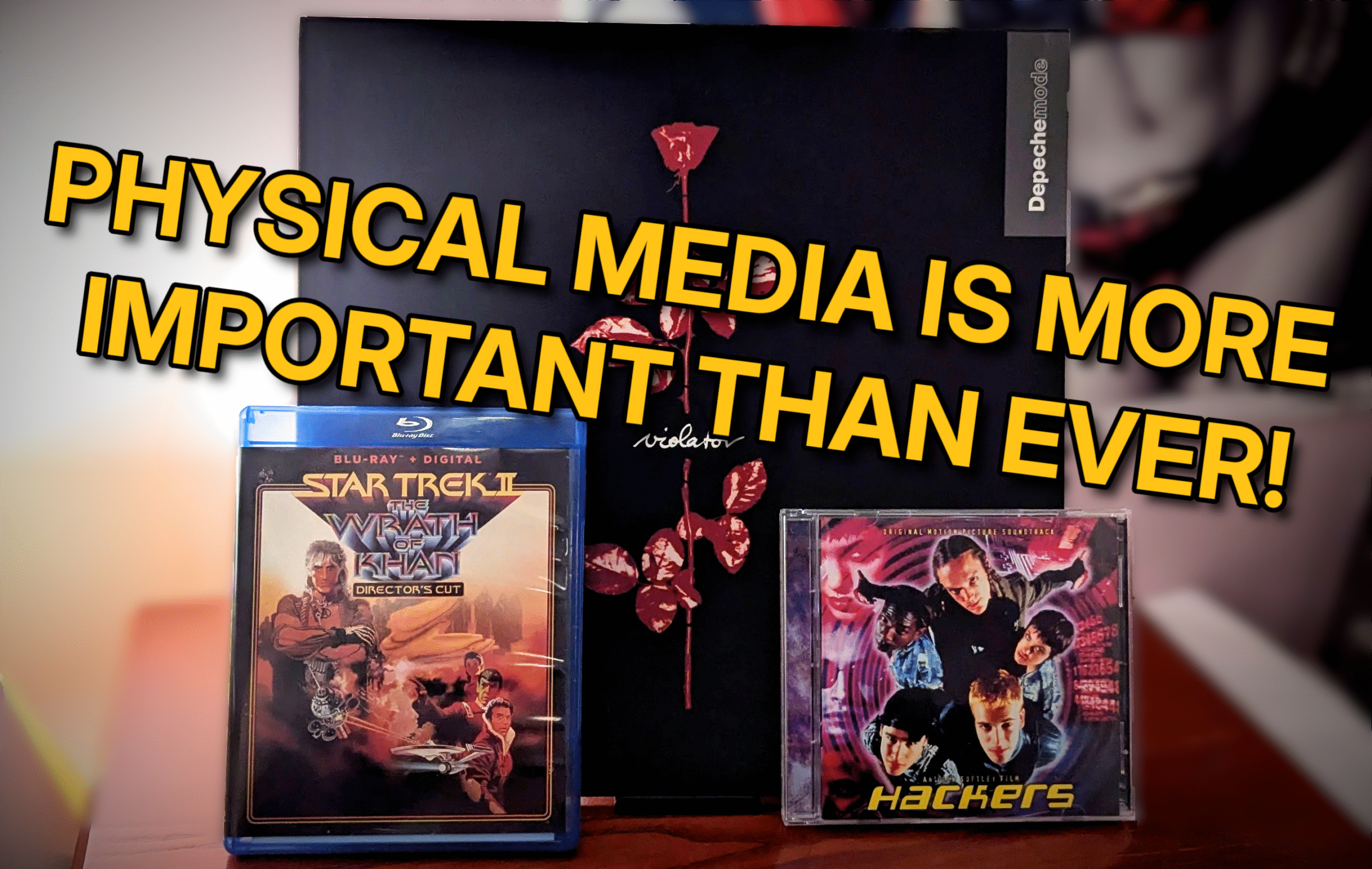
“Streaming is great—until your favorite album vanishes like a deadbeat dad ‘going to get the milk.’”
We all enjoy the convenience of streaming music and movies and our favorite shows, right? Of course we do, but here’s the thing—it has some serious downsides.
Streaming is great—until your favorite album or movie vanishes like a deadbeat dad “going to get the milk.” Sure, it’s convenient. Until it isn’t. Until the thing you love gets yanked because some studio exec decided to play musical chairs with licensing rights.
This is just one reason physical media is so important. If you own a physical copy of the CD, vinyl record, DVD, or Blu-ray, they can never take that away from you, regardless of what happens with the rights.
Physical media isn’t obsolete. It’s essential. It’s the difference between access and ownership, between a memory you can hold in your hands—an emotional anchor to a moment that mattered—and a file that disappears when the platform loses the license or decides it’s not profitable anymore. When I buy CDs, vinyl, or Blu-rays, nostalgia might play a small part—but mostly, it’s because I want the things I care about to still exist tomorrow. Or ten years from now.
Streaming Is Access, Not Ownership
I’m sure plenty of us have dealt with this problem: some song you want to listen to is suddenly gone from Spotify, or one of your favorite albums on YouTube Music is missing songs. Or maybe the whole album just isn’t available. You know it exists—so where the hell is it? It’s even worse with movies and TV shows.
There are whole articles dedicated to what content is leaving Netflix in a given month, and of course situations like the infamous case of Kevin Smith’s 1999 comedy Dogma. For the longest time, you couldn’t buy it in stores or digital retailers, and it didn’t exist on streaming platforms—all because Harvey Weinstein snatched the rights like a goblin hoarding loot, then sat on them like a troll under a bridge—until they finally tossed his ass in jail, which frankly took way too long. Then he refused to sell Kevin the rights for less than $5 million, which was too high a price even for Smith, who offered up to $1 million for a film HE CREATED!
If you’ve got a physical copy? Good luck to them trying to repo it from your shelf!
Eventually, Iconic Events purchased the rights from Weinstein and partnered with Smith to re-release and tour the film. But you know who didn’t have to deal with Dogma being unavailable? Anyone who bought a physical copy between 2000 and 2008.
Let them pry it from my cold dead hands!
Recently, the Lord of the Rings trilogy was removed from Amazon Prime. Sure, it’s still available on HBO Max, but what about people who don’t subscribe to that service? They’re out of luck. I don’t have to worry about that, though, because I bought the entire Hobbit and Lord of the Rings extended edition box set on Blu-ray.
When you stream or buy media on a digital platform, you don’t own it. You’ve bought a limited license to access it—only for as long as the service allows. They can yank it off the platform without warning, and you’re left staring at a blank search result like a chump. But if you’ve got a physical copy? Good luck to them trying to repo it from your shelf!
Memory You Can Hold
Ownership rights are a big issue—but they’re not the only reason physical media matters. It’s something you can hold in your hands. Something you can form a real connection with.
Nearly every CD I own has a story. I remember the store I bought it in, what I was doing the first time I listened to it, and how it made me feel. Even just holding the case or flipping through the booklet brings those moments back.
Humans form emotional links to physical objects—especially when those objects are tied to meaningful experiences. I have items displayed around my bedroom that aren’t just collectibles; they’re keepsakes. Like promotional items from movies I saw with my son. They’re memory anchors.
Memories In The Music
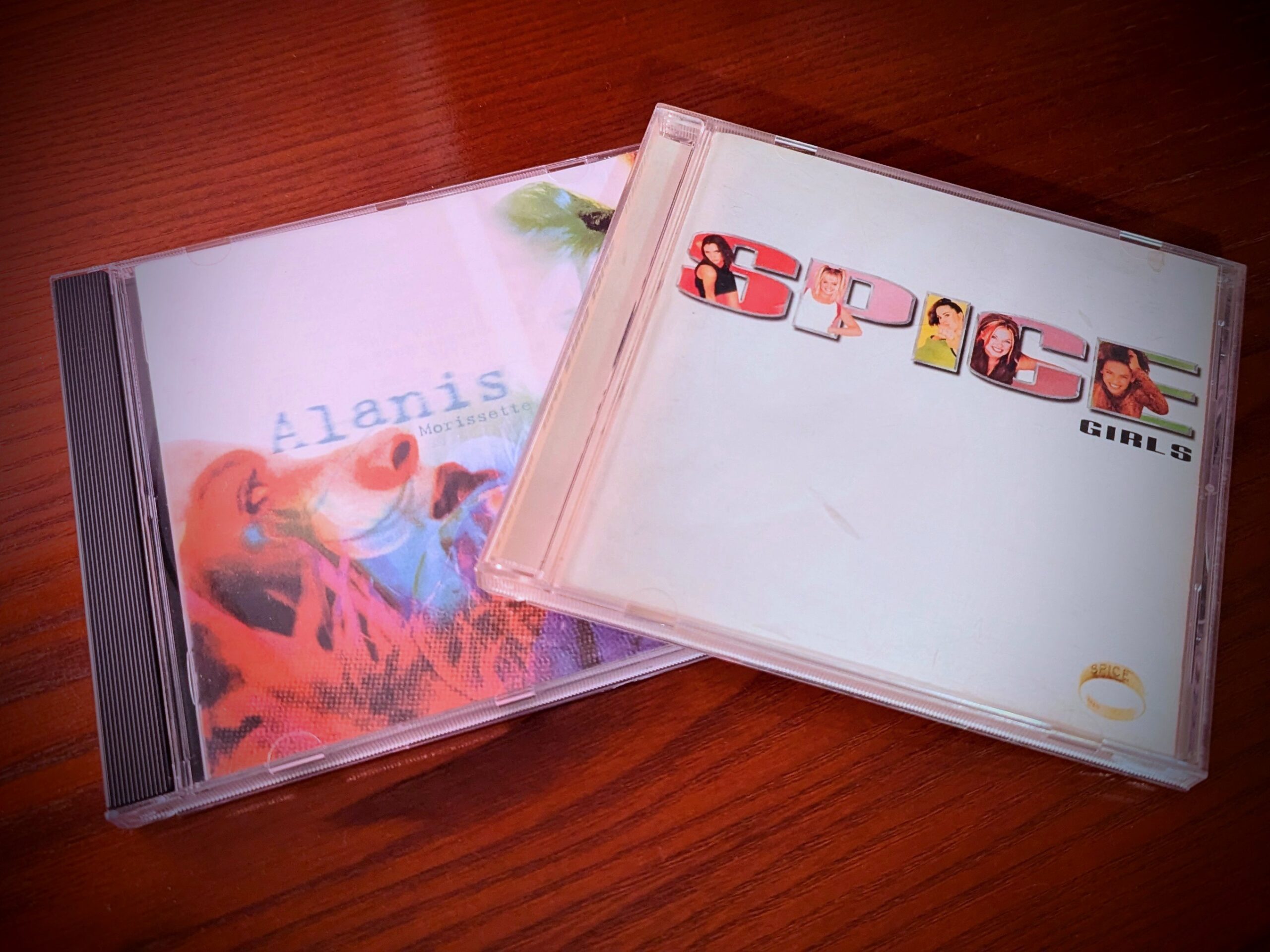
One summer night as a teenager, I was walking along Long Beach Blvd. on Long Beach Island, NJ, when I wandered into a music store and bought the Spice Girls’ debut album ‘Spice’. I popped it into my Discman and kept walking. 2 Become 1, despite its overtly sexual lyrics, hit differently in that moment. The music—soft, dreamy, a little melancholy—synced perfectly with the quiet buzz of the evening. Streetlights, store signs, and car headlights lit up the night as I drifted through it, soundtracked by a song that felt more like longing than lust. Even now, the song and its music video snap me back to that walk—peaceful, neon-lit, and suspended in teenage stillness.
Vinyl Matters Because You Make It Matter
It’s not just CDs. A few years ago, I started collecting vinyl—not because it was trendy, but because it was how I first experienced music as a kid. Cassette tapes were around, sure, but records hadn’t disappeared yet. Some of my favorite childhood memories are of playing vinyl in my bedroom. I don’t have those original records anymore, but the resurgence of the format gave me a chance to recapture that feeling.
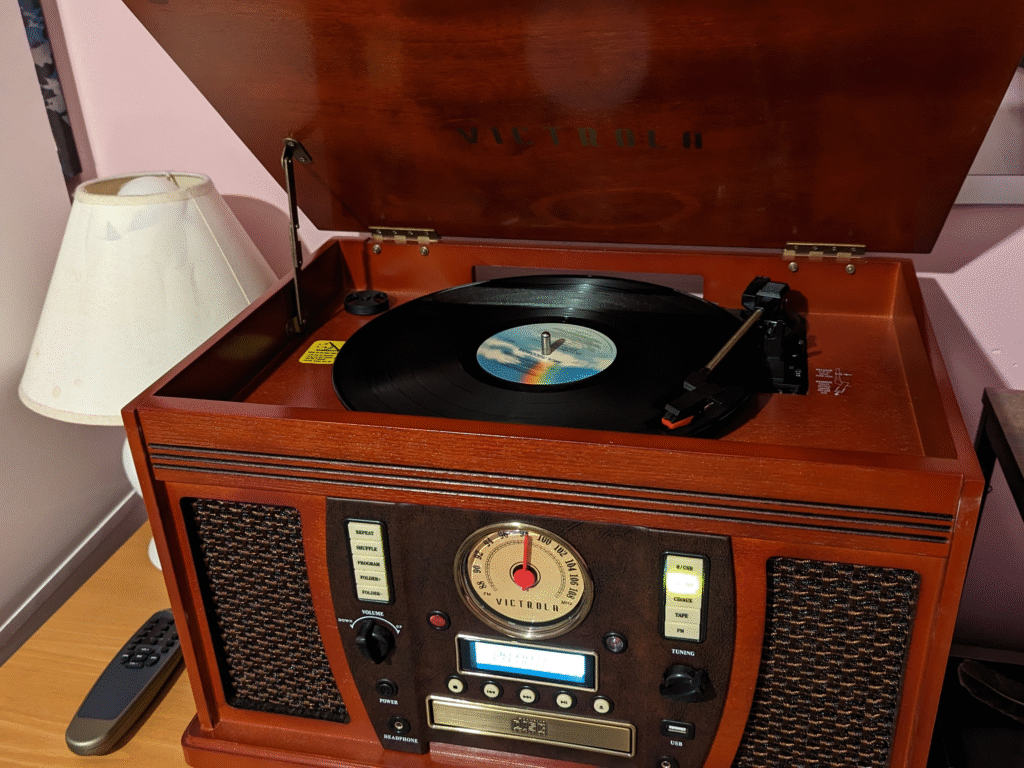
The albums I own now are different, and I treat them with far more care. But even so, the act of playing them—the “ritual,” if I have to call it that—still unlocks something. It’s not just nostalgia. It’s reconnection. And every new album I buy becomes part of a new memory. I clean the disc, swap out the paper sleeve for an anti-static one, preserve the originals if they have artwork, and store the whole thing in a protective outer sleeve. That process has become its own kind of joy. The time you put into maintaining your vinyl records makes them feel more valuable.
Browsing stores for movies used to be fun
Blu-rays don’t carry quite the same emotional weight for me. Not because the movies matter less, but because the experience of buying them has been gutted. With the death of dedicated video stores and movie sections in retail, I’ve had to buy most of my Blu-rays through Amazon. That robs me of the discovery—the browsing, the hidden gems, the satisfaction of finding exactly what I was looking for. It’s sterile.
But at least CDs and vinyl still have a presence in physical stores. And when I walk into one, that’s the first section I go to. I’m always hoping something will stand out. And when it does, it’s not just a purchase—it’s a moment.
Other Benefits of Owning Physical Media
While streaming and digital purchases of movies and music can be convenient, it’s often just that: the movie, or the music. It doesn’t include all the extra things that really make the purchase meaningful.
Streaming platforms don’t just serve content—they spoon-feed you whatever their algorithm thinks you’ll click next, like a toddler with a YouTube addiction.
Streaming strips away the depth of the release and just gives you the track or the film, but physical media releases are the full artistic presentation—the way the songs are ordered, the transitions, hidden tracks, the cover art and liner notes. It’s all part of the artist’s collective vision of how their creation was meant to be presented. With movies, it’s the bonus features, the commentary track, the deleted scenes, the behind-the-scenes look at how the film was made. You lose all of this important context with streaming, and as an artist myself, it’s tragic to see all that effort tossed aside.
Freedom from Algorithmic Noise
Streaming platforms don’t just serve content—they spoon-feed you whatever their algorithm thinks you’ll click next, like a toddler with a YouTube addiction. Autoplay, recommendations, curated playlists: it’s all designed to keep you listening, but not necessarily to what you chose. That’s not always sinister—discovery is harder now. Fewer people listen to radio, and record stores aren’t exactly thriving hubs of genre exploration. So algorithms step in. But physical media doesn’t do that. When you put on an album or movie, it’s intentional. You chose that specific work because it matched your mood, your memory, or your moment. That kind of choice isn’t just consumption—it’s connection.
Conclusion
I stream music and video every day. There’s nothing wrong with that—convenience is, well, convenient. But for the things I want to always have access to, I buy physical copies. With music, I often split the difference: buy the CD, rip it to my computer, and upload the files to my streaming account so I can listen anywhere. Streaming is fine. But for the content that really matters, I make sure I have a physical copy—so I can keep it, and keep the memories that come with it.
Leave a Reply